



A well maintained yard is both attractive and important to the health of your landscape for a variety of reasons.
We all want a yard that looks manicured and well cared for, and limbing up trees is an important aspect of that look.
Reasons to Limb Up (Prune Lower Branches) Trees
A big reason to limb up trees is for aesthetic purposes. A shapely tree looks a lot nicer that a tree that has been left unattended. We regularly trim our hair…why not our trees?
Another very important reason to limb up trees is to allow more sunlight to reach the ground. In woodland areas, you won’t need to do this, however, in areas where your plants are looking leggy, or you are trying to grow grass, or if certain shrubs just are not flowering like they should, you’ll need to see what you can do to bring more light to the ground. Short of cutting the trees down, limbing up is the next best thing.
All these reasons made me think about the trees on our property and how many of them were looking overgrown and unkempt.
Limbing Up Weeping Cherry Trees
Take for example our weeping cherry trees.


Our cherry trees typically produce real cherries during the summer, but not this year. I believe the overgrowth caused a lack of circulation and prevented the trees from producing this yummy fruit. Now that we have removed many of the lower hanging branches, I hope they will bloom beautifully next Spring and produce hundreds of fresh cherries next summer.
River Birch Trees

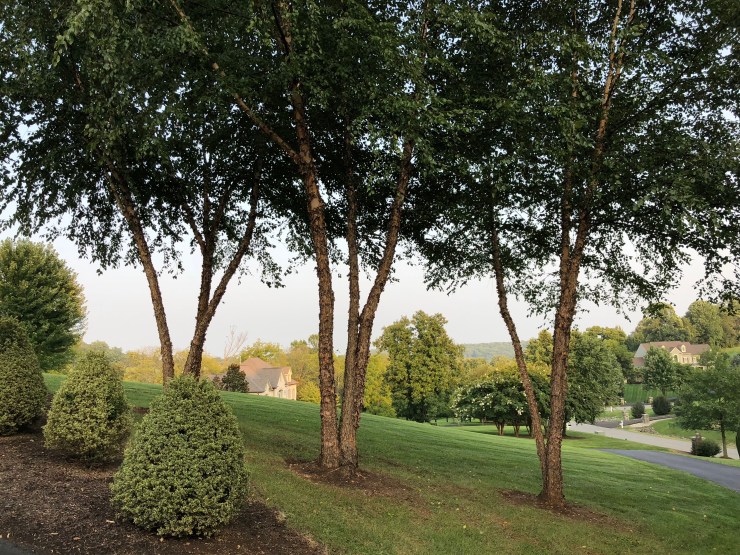
This picture from our front yard, shows a cluster of River Birch trees in the background. The limbs are so long, they are nearly touching the ground. Their beautiful peeling bark is not visible due to the long branches covering the trunks. River Birch trees also tend to lose small branches and branchlets during windstorms. I am constantly picking up small branches on the lawn that have fallen from the tree.
Please ignore the unsightly landscaping but take notice of the restored walkway HERE!
Best Time of Year to Prune River Birch Trees
Unlike other trees, that should be pruned in late Fall to early Spring, the River Birch tree has a different timeline.
If pruned too early in the year, when awakening from their winter rest, they bleed a heavy flow of sap. The best time to prune River Birch trees is late summer or early Fall. By pruning at the proper time, we will avoid sap flows, and the egg laying season for most insects that infest pruning wounds. These insects cause unsightly damage, and they can spread serious diseases and kill trees. We can reduce the risk of attack by pruning after their early summer flying season.


Reasons to Prune River Birch Trees
Other reasons to prune River Birch Trees include
- Remove dead, diseased and injured branches.
- Branches that rub together allow entry points for insects and disease, one of the branches should be removed.
- Branches that grow nearly straight up have weak attachments to the trunk. Taking them down while they are small will prevent them from breaking off later.
- Remove a branch that is too close to another branch, this is best done when the tree is young.
- Remove branches that are too close to the ground to make landscaping easier and allow for more comfortable shade.

General Clean Up of Landscape


And the space looks cleaner and well groomed.

I am also planning on limbing up the lower branches on our crape myrtle trees and then giving them a heavy top pruning in February.
How about you? Do you regularly trim trees on your property?
For more informative posts about outdoors and gardening, subscribe to Happy Haute Home and follow along on Pinterest HERE, and Twitter HERE and feel free to pin and tweet your favorite pics from Happy Haute Home.
You can also get daily home decor inspiration by following along on Instagram HERE.


